Beginner's Guide to Knitting Supplies
What to buy when you're just starting to knit: yarn, needles and the accessories that help.
If you are new to knitting, you may not be familiar with all of the knitting accessories that are available to make your knitting life easier and more productive! Let the tools do the thinking so you can focus on knitting!
The beginner's essentials
At a minimum, to start knitting you'll need yarn and needles!
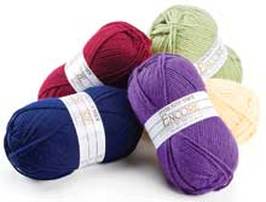
Medium weight yarn
Encore or Cascade 220, in worsted or chunky weight. Get 1 skein, and NOT black (or overly variegated)! One skein is about 100g, or 200 yards. That's enough to make a gauge swatch and a hat in my beginner's course!
Knitting needles
US size 8 or 9 straight or circular needles. If you are planning on knitting a flat hat (free pattern here!), get straight needles. Otherwise, if you are planning on learning how to knit in the round, get a 16" circular needle in US size 8 or 9 and a set of 5 double pointed needles in US size 8 or 9 (approximately 7 inches long).
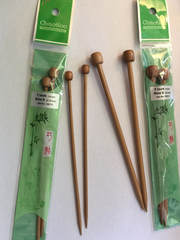
I highly recommend bamboo or driftwood needles rather than metal, since they are less slippery, and that's better for new knitters.
A few more helpful tools
And if you want just a few more things that will ease your mind as you learn and continue to knit...
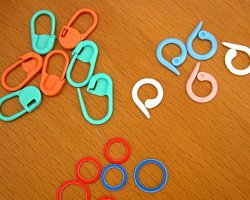
Stitch markers
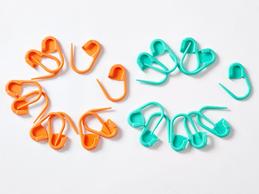
Stitch markers really help take the counting out of knitting. Place them every 10 stitches while casting on to keep track, or place them between pattern repeats. I recommend starting with the "closed" loop type, though the open loop ones have their purposes on certain projects. Once you get used to the concept of the stitch marker, you can buy some very cute and fancy ones!

Row counters
Row counters are one of the best tools. They come in all sorts of varieties: clicky ones, turning ones, digital ones, phone apps! But one thing is for sure, this is one of those necessary tools that makes your knitting life easier. I highly recommend keeping track of what row you are on by setting your row counter to that row. That way, if you stop in the middle, you'll still know where you are when you pick up your knitting again.
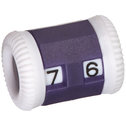
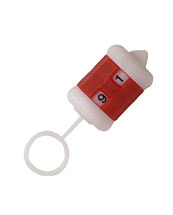
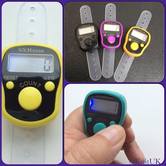
There are types that fit on straight needles, as well as those that fit onto circular needles. Pick the kind that best suits your project!
Yarn needle
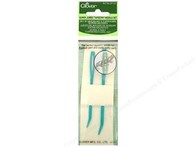
A yarn needle is a pretty essential tool for all knitters. You'll usually need it to weave in your ends, but it comes in handy on almost every project.
Gauge and needle size ruler
Measuring gauge becomes more and more important as you knit things that need to fit, like sweaters and hats. With scarves you can often get away without measuring gauge, but anything you want to match the size of a pattern will require knitting a gauge swatch and measuring it.
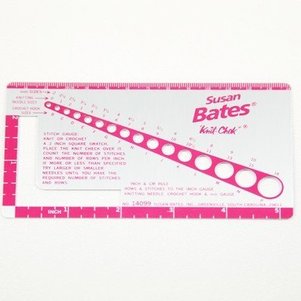
Additionally, once you start to acquire more and more knitting needles, this ruler will help you figure out what size all of those needles are!
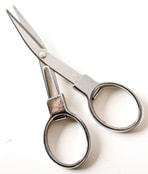
Small scissors
Whether or not you travel with your knitting, it helps to have a small pair of scissors in your knitting kit. I personally LOVE my pair that folds up so there are no pointy edges at all. These are GREAT for air travel, and they won't stab through any bag you put them in.
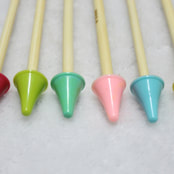
Point protectors
Point protectors are a great knitting accessory, especially if you want to be able to quickly put down your projects and store them. They make sure your project won't slip off the needles. I still recommend pushing the stitches down onto your needles, but if you are using double pointed needles, you can put these on the needles you are not actively knitting with!
More advanced tools
Cable needle
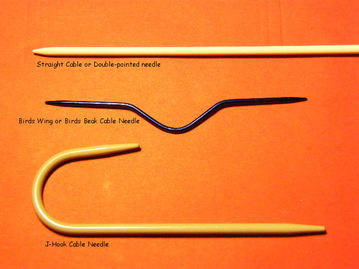
If you are venturing into the world of cable knitting (woohoo!), then the cable needle is your essential tool. There are a couple of varieties: a straighter version with a small bump in the middle, or the type that is more of a hook. Try both and see which you prefer! The rule of thumb is that you slip stitches onto the short end of the needle, then knit them off the longer end. You can also use a spare double pointed needle to hold your cable stitches!
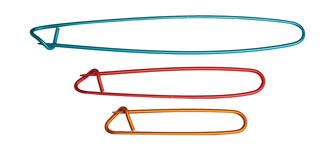
Stitch holders
Stitch holders are a very necessary tool for many projects. Generally they come into play in sweater knitting, when you are keeping some stitches "live" while you continue to knit another section of the garment. See how to slip stitches to a holder.